The UXO Risk Assessment Process Explained
From Desktop Surveys to On-Site Investigation
Due to the UK's extensive wartime history and military training activities, unexploded ordnance (UXO) remains a significant and potentially lethal risk. Failing to properly assess and manage this risk can lead to project delays, severe financial penalties, and, most critically, injury or loss of life.
To minimise these risks, applying a professional and systematic UXO risk management process is a crucial legal and ethical obligation. At Artios Global, we deliver accredited processes for identifying, evaluating, and mitigating UXO risks, ensuring your project proceeds safely, on schedule, and in full compliance with UK health and safety regulations.
By understanding the various UXO risk management stages, from initial preliminary UXO risk assessment to appropriate On-site mitigations, you can protect both your personnel, and your investment.
What is Unexploded Ordnance (UXO)?
Unexploded ordnance (UXO) refers to military munitions, such as aircraft bombs, projectiles, grenades, and mines, that were used in conflict or during training but failed to detonate as intended. These devices can remain active and dangerously unstable for decades, even over a century after they were deployed.
Given the UK's history, particularly the extensive German bombing campaigns during World War II and widespread military training activities, UXO contamination is a tangible concern for modern construction. Cities like London, Plymouth and Glasgow were heavily targeted, leaving a legacy of buried explosives.
Environmental factors such as ground movement, corrosion, and water ingress can increase the volatility of these devices, making any ground-intrusive work, from excavation to piling, a potentially high-risk activity.
The UXO Risk Management Process
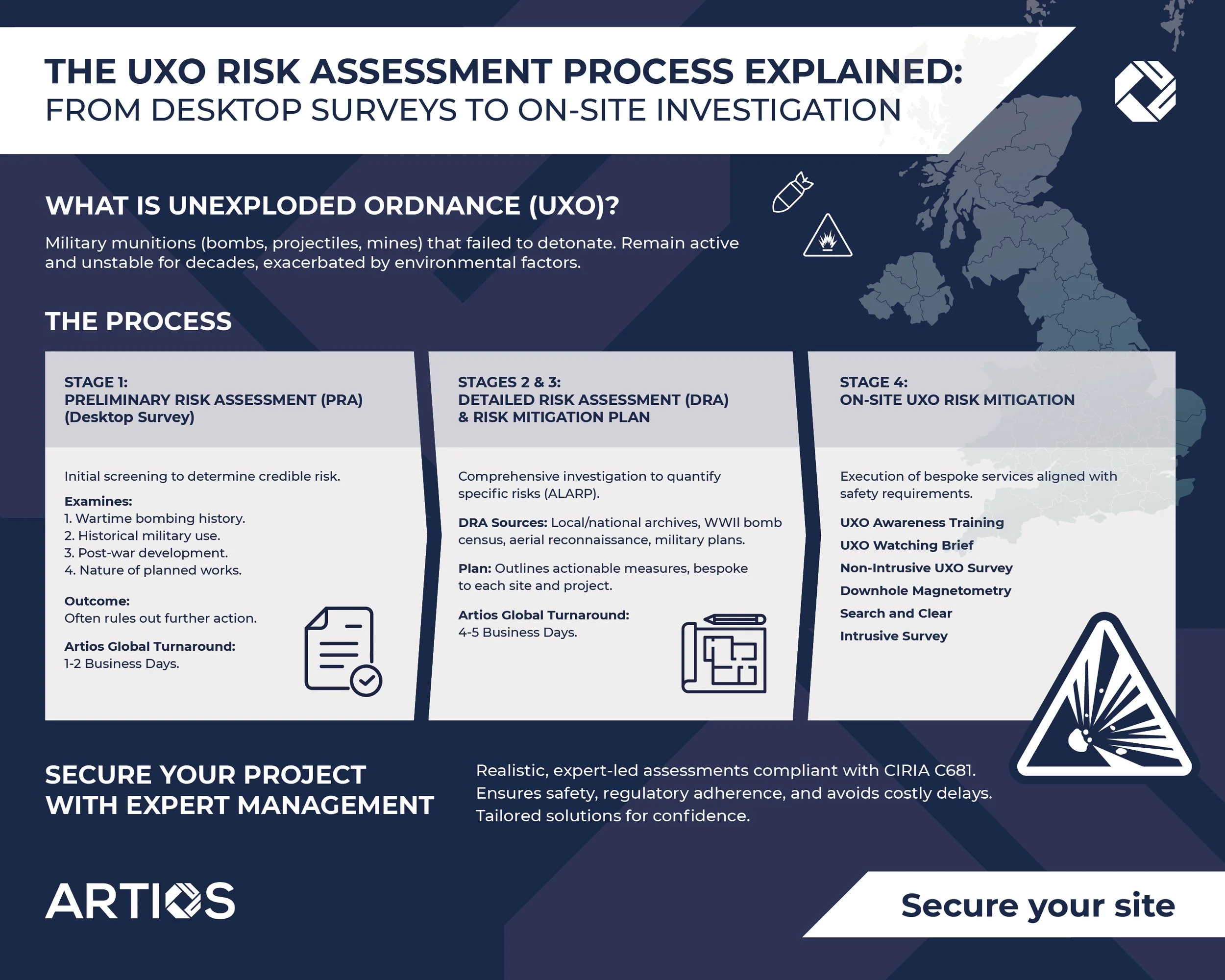
To manage these hazards effectively, the UK construction industry follows a structured framework outlined in the CIRIA C681. This process is divided into progressive stages, designed to provide a comprehensive and proportionate response to the potential risk at a specific site.
The primary stages include:
Stage 3: Risk Mitigation Plan
Artios Global specialises in delivering expert support for Stages 1 to 4, providing realistic, evidence-based assessments to guide your project safely.
Stage 1: Preliminary Risk Assessment (PRA)
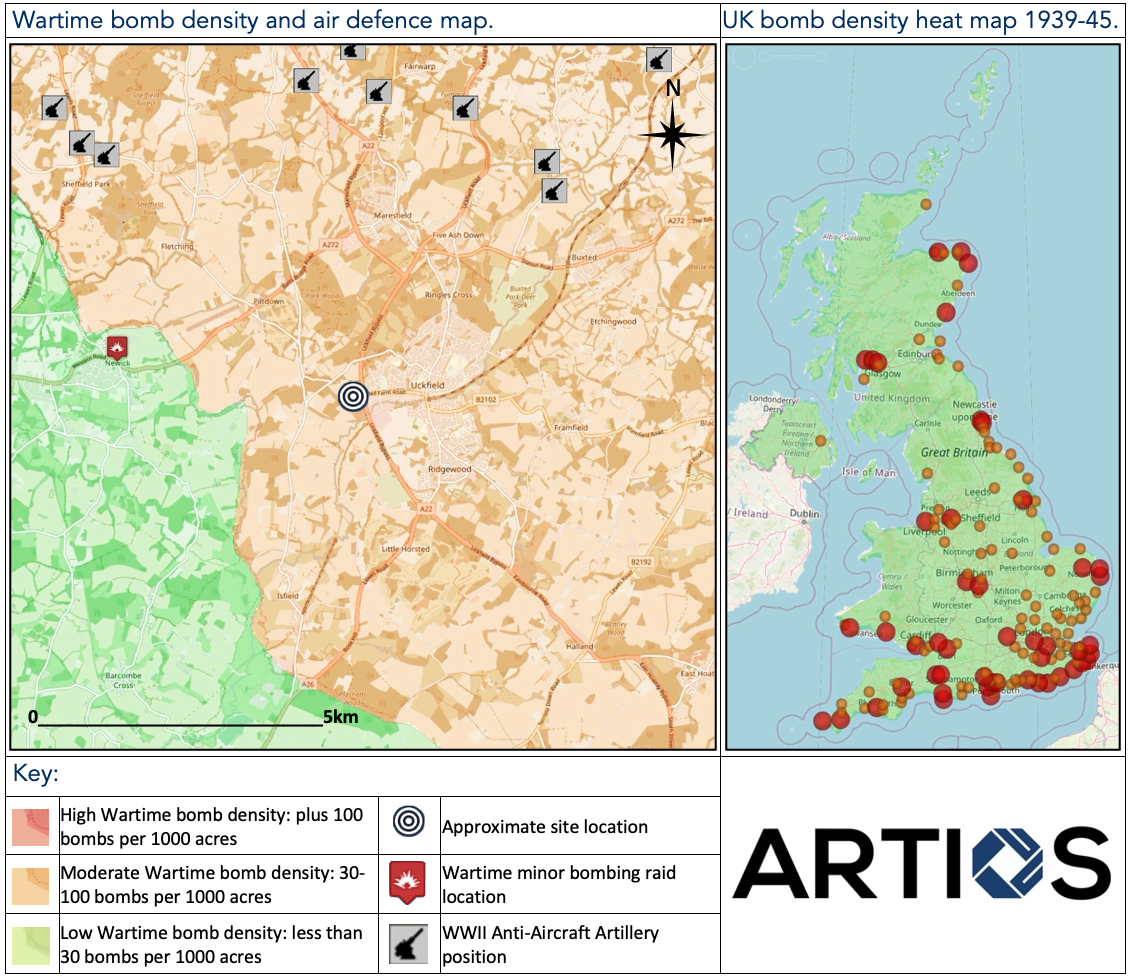
A Preliminary Risk Assessment (PRA), often referred to as a UXO desktop survey, is the critical first step in the risk management process. Its main purpose is to conduct an initial screening of a site to determine if a credible UXO risk exists. For the majority of sites in the UK, a PRA can effectively rule out the need for further action, saving projects significant time and expense.
This stage involves a brief desktop study that examines four primary factors:
The history of wartime bombing in the immediate vicinity of the site.
Historical military use of the land, such as for training grounds or defensive positions.
The extent of post-war development, which may have disturbed or cleared previous contamination.
The nature of the planned intrusive works and the potential for these activities to encounter UXO.
By compiling and analysing historical data, Artios Global can deliver a PRA report within 1-2 business days. This rapid turnaround allows project managers to make informed decisions quickly and confidently, ensuring compliance with regulations like the Construction (Design and Management) Regulations 2015 (CDM 2015) from the outset.
Stages 2 & 3: Detailed Risk Assessment (DRA) & Risk Mitigation Plan
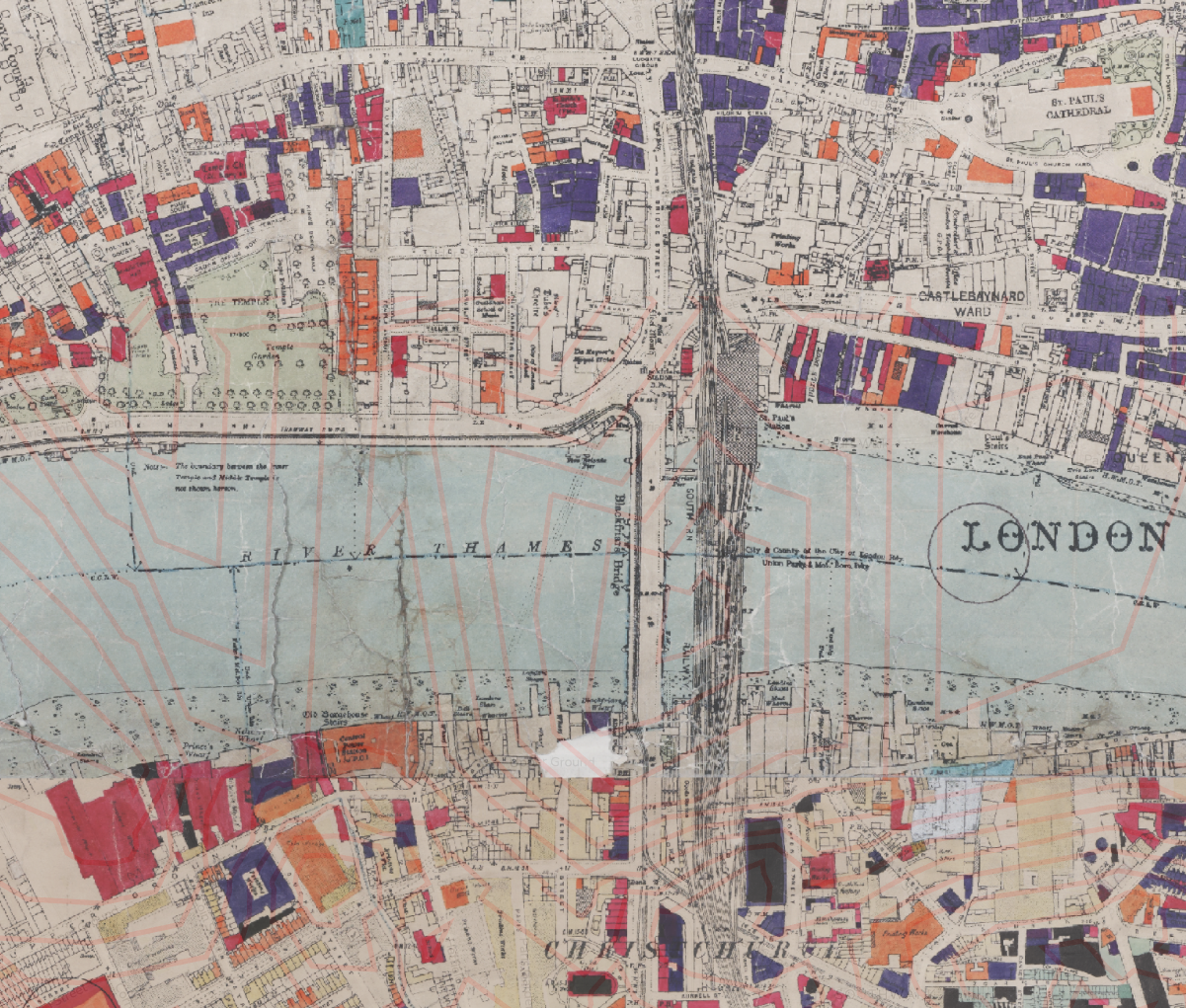
Should the Preliminary Risk Assessment identify a credible threat, the conduct of a Detailed Risk Assessment (DRA) becomes imperative. This constitutes a comprehensive investigation aimed at quantifying the specific risks inherent to the site, thereby establishing the foundation for a robust mitigation strategy.
A DRA systematically expands upon initial findings through exhaustive research, incorporating a diverse array of sources. These include, but are not limited to:
Local and national archives.
WWII bomb census mapping and incident reports.
High-resolution aerial reconnaissance photography sourced from both Allied and Luftwaffe records.
Military plans, training documentation, and war diaries.
This multi-layered analytical approach enables our specialists to construct a detailed risk profile of the site. This profile precisely identifies specific zones of potential contamination and ascertains the types of unexploded ordnance that may be present. The resultant assessment provides the evidence required for the subsequent design of an effective and proportionate Risk Mitigation Plan at Stage 3.
Thanks to our recent partnership with Queen’s University Belfast to develop bespoke digital research tools, Artios typically delivers a comprehensive DRA and UXO mitigation plan within 4-5 business days, significantly faster than the industry average for turnaround time.
Following the completion of the Detailed Risk Assessment, a precise Risk Mitigation Plan is developed. This plan clearly outlines the specific, actionable measures essential for managing the identified UXO hazards and achieving the ALARP risk level.
A bespoke UXO mitigation plan is designed and tailored to the unique characteristics of the site and the defined scope of the project. It is engineered to integrate seamlessly into existing project workflows, thereby minimising disruption while rigorously upholding the highest safety standards. This plan establishes a clear, strategic framework for effectively managing health and safety risks and averting business interruptions, thus ensuring project continuity with assured confidence.
Stage 4: On-site UXO Risk Mitigation

The execution of the comprehensive Risk Mitigation Plan invariably necessitates the strategic deployment of highly specialised On-site services. Specific services are selected as per their suitability to the site and the impending works, ensuring their optimal alignment with the project's operational parameters and the explicit safety requirements identified during prior assessment stages.
This bespoke integration guarantees that all potential Unexploded Ordnance (UXO) risks are addressed with the utmost efficacy and professionalism, providing a robust framework for site safety. These critical services may encompass:
UXO Awareness Training: Provision of essential knowledge to on-site personnel, enabling them to competently identify and safely report suspicious items.
UXO Watching Brief: The continuous presence of a qualified UXO specialist to diligently monitor intrusive works within designated high-risk areas.
Non-Intrusive UXO Survey: Utilisation of advanced technologies, such as magnetometers, for the detection of buried metallic anomalies without necessitating ground disturbance.
Downhole Magnetometry: This technique detects deep-buried metallic objects by deploying magnetic sensors into boreholes. It is particularly effective for identifying deep seated ordnance, such as WWII High Explosive (HE) bombs. Downhole Magnetometry is ideally suited for high-threat sites that require deep foundation works, offering superior detection depth and accuracy compared to surface-based methods.
Search and Clear: A handheld UXO detector sweep provides a practical and cost-effective method for scanning for buried ordnance within confined or access restricted areas, including those impacted by dense vegetation or difficult terrain.
Secure Your Project with Expert UXO Risk Management
Navigating the complexities of unexploded ordnance risk requires specialist expertise and a methodical approach. From the initial UXO desktop survey to the development of a comprehensive risk mitigation plan, each stage of the assessment process is vital for ensuring the safety of your personnel, adhering to UK regulations, and protecting your project from costly delays.
At Artios Global, we provide expert led UXO risk assessments that are fully compliant with CIRIA C681 guidelines. Our commitment to precision, rapid turnaround times, and tailored solutions empowers our clients to manage UXO challenges with confidence.