UXO RISK mANAGEMENT

Government Assured UXO Risk Management Services
Artios delivers every stage of the CIRIA C681 UXO risk management process, from Preliminary Risk Assessments (PRAs) and Detailed Risk Assessments (DRAs) to risk mitigation planning and on-site implementation. We also provide independent peer reviews and specialist UXO consultancy, helping you manage unexploded ordnance risk confidently throughout your project.
STAGE 1 - UXO PRELIMINARY RISK ASSESSMENTS
A UXO Preliminary Risk Assessment (PRA) is a cost-effective desktop study that identifies whether UXO could present a risk to your construction, development or ground investigation project.
Although many parts of the UK were affected by wartime bombing and military activity, UXO risk varies considerably from site to site. For many locations, an initial assessment can establish that the risk is sufficiently low and that no further UXO investigation or mitigation is required.
Based on systematic research and existing data sets, a Preliminary UXO Risk Assessment can rule out the need for further action at many sites, eliminating the need for any further actions to manage potential risks from UXO contamination.
Artios PRAs align fully with Stage 1 for Risk Management Strategy as outlined in the industry-standard 'CIRIA C681 UXO - A Guide for the Construction Industry.'
Explore our Preliminary Risk Assessment FAQs to learn more.

How is your UXO PRA developed, and what information does it contain?
Artios creates UXO Preliminary Risk Assessments using data obtained from thorough desktop research. Following the guidelines of CIRIA C681, our UXO PRA considers four primary factors to assess the likelihood of a UXO encounter:
1. The extent and type of wartime bombing in the area.
2. The historical military use of the area, including training, defense, or other purposes, along with the likely types of ordnance used.
3. Post-war development in the area after exposure to potential UXO contamination.
4. The specifications of planned construction work and the exposure of other potential receptors to UXO contamination.
Our PRAs are communicated to you through clear and concise reports, summarising the information and findings.

STAGE 2 - UXO DETAILED RISK ASSESSMENTS
Where a UXO Preliminary Risk Assessment identifies an elevated risk, we recommend a UXO Detailed Risk Assessment (DRA).
The UXO DRA uses systematic, site-specific detailed research to examine the potential UXO hazard in much greater detail, establish the level of risk and identify proportionate mitigation measures.
Our approach aligns with Stages 2 and 3 of the risk management process set out in CIRIA C681: Unexploded Ordnance (UXO) – A Guide for the Construction Industry. It provides the evidence needed to make informed project decisions and manage UXO risk to a level that is as low as reasonably practicable (ALARP).
How does Artios produce Detailed UXO Risk Assessments?
Artios' UXO Detailed Risk Assessment process uses information gathered from extensive research across various sources, including:
· Local and national archives.
· Bomb census mapping.
· Luftwaffe and Allied aerial photography.
· Military defensive plans and training records.
· UXO/Bomb incident reports from WWII to the present day.
· Site Walkovers (if required).


STAGE 3 - RISK MITIGATION PLAN
A UXO Risk Mitigation Plan provides a clear, practical framework for managing health and safety risks and minimising potential business interruption.
Artios uses a CIRIA aligned risk rating framework to define proportionate mitigation measures and demonstrate how their implementation will reduce residual UXO risk to a level that is as low as reasonably practicable (ALARP).
For many sites, the plan also includes a risk zone map showing where specific mitigation measures apply to different activities. This allows project teams to understand and implement the appropriate controls across the site.
Every Artios Detailed UXO Risk Assessment includes a comprehensive Risk Mitigation Plan aligned with CIRIA C681 guidance.


STAGE 4 - On-sITE UXO RISK MITIGATION
As one of only two UK Ministry of Defence (MOD) assured providers of Explosive Ordnance Clearance, Artios delivers on-site UXO mitigation services that clients can rely on.
Operating nationwide, Artios can provide anything from a single UXO Engineer for a one-day assignment to large, multidisciplinary teams working on long-term projects in some of the UK’s most heavily UXO-contaminated areas.
Our on-site UXO mitigation services include:
UXO watching briefs
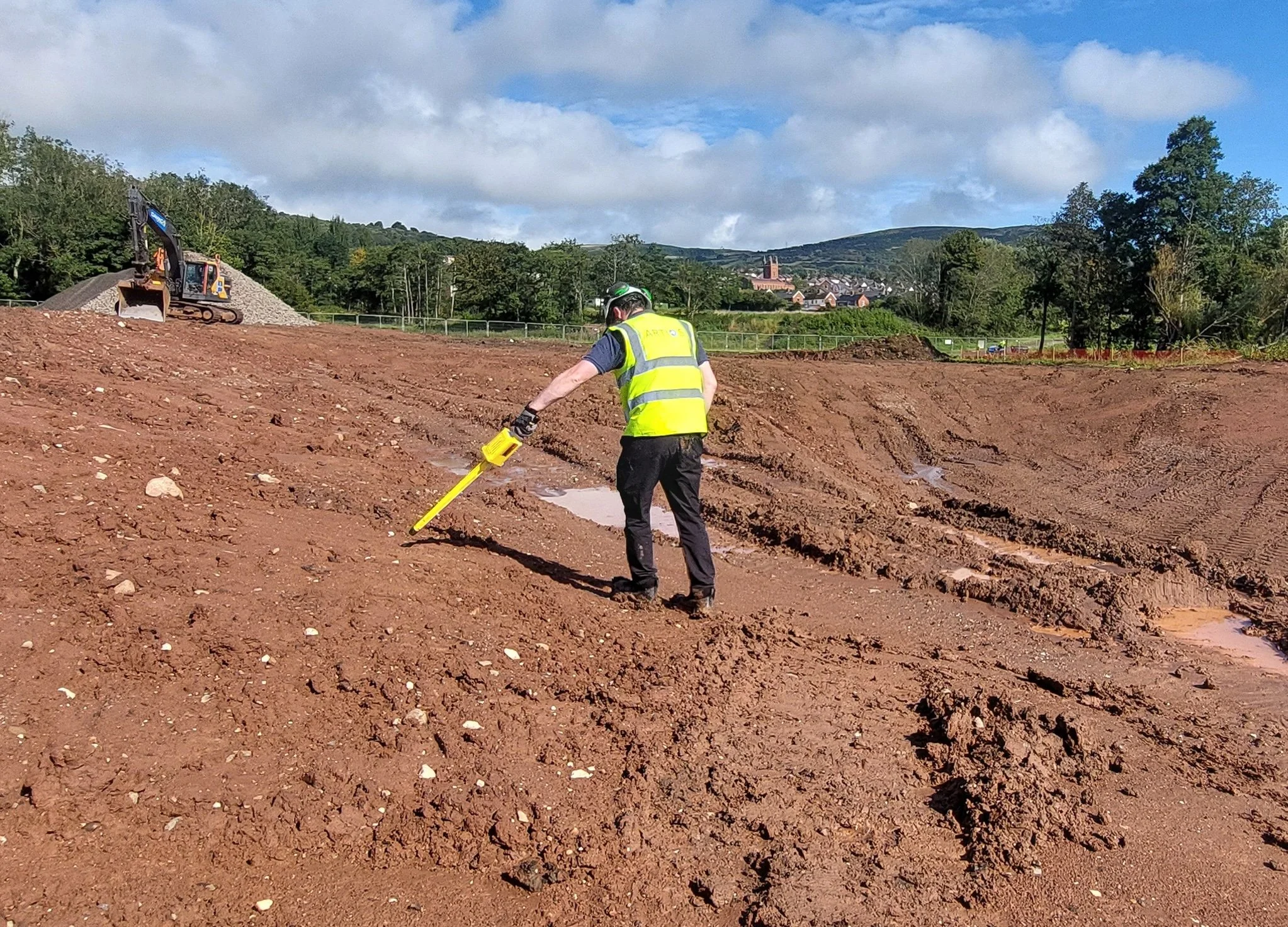
Intrusive UXO surveys, including Cone Penetration Testing
UXO clearance for borehole drilling and window sampling
Non-intrusive UXO surveys
UXO Target investigation
Search and clearance
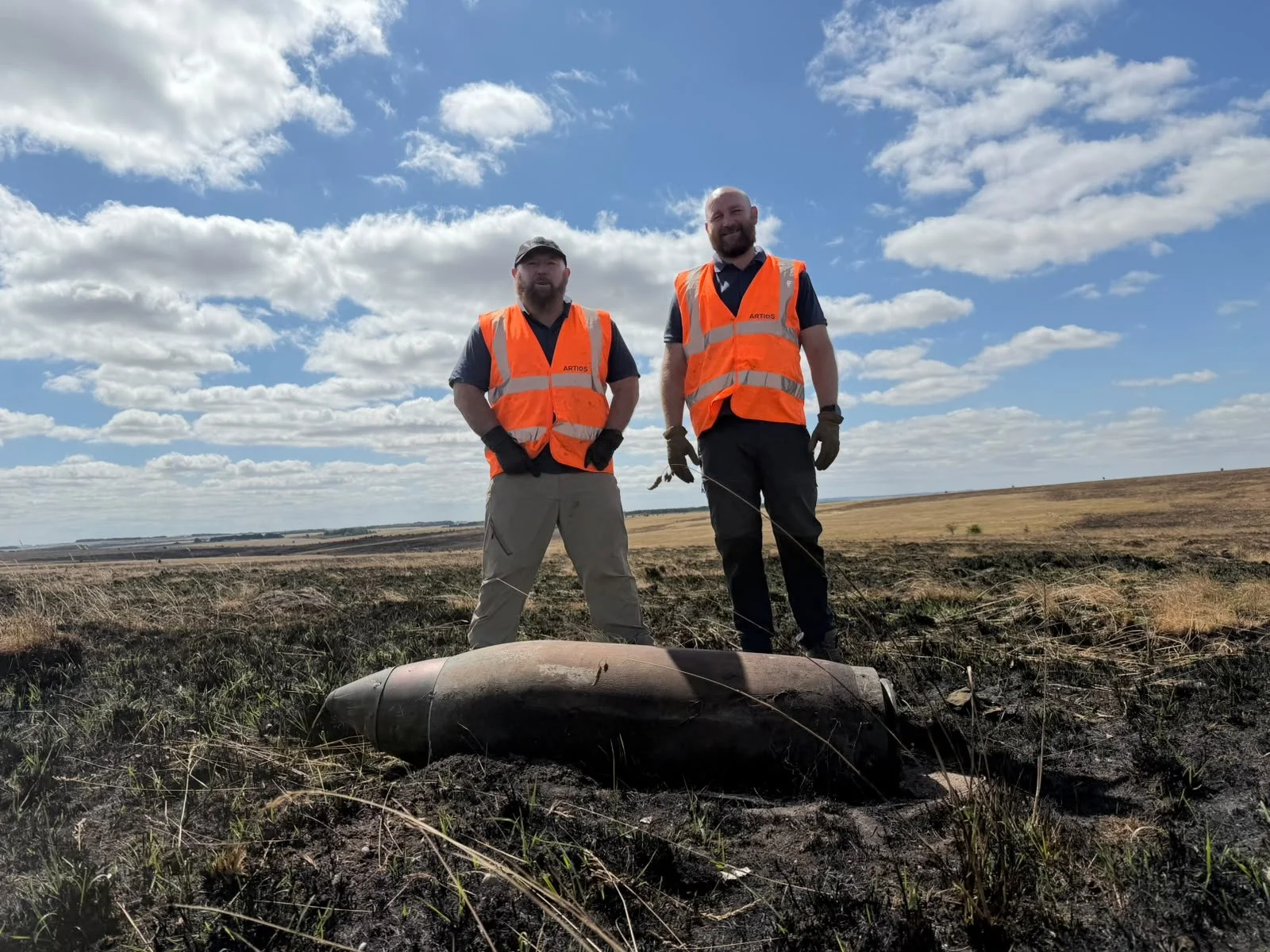
On-site UXO disposal conducted under the appropriate Home Office explosives acquisition and Section 5 licensing
Visit our detailed FAQs if you have any other questions regarding our On-Site Risk Mitigation Services, or any other general UXO queries. Alternatively, speak to our team directly by clicking the button below.

UXO Consultancy Services
Independent Peer Review of Risk Assessments
Effective UXO risk management is both time and cost-intensive and demands reliability. Artios offers an independent peer review service for risk assessments procured for a site.
We provide impartial advice on the appropriateness of recommended mitigations, with our independent peer reviews offering assurance and confidence, ensuring that the specified mitigations are genuinely necessary.
UXO Risk Management: Client Representation and Assurance
When on-site UXO mitigations are underway, Artios extends its services to provide external Quality Assurance as your client representative. This ensures that the procured UXO mitigations are executed to the standard specified.
Our external Quality Assurance process commences with a desk-top review of the UXO mitigation company’s systems, procedures, and staff qualifications. Subsequently, on-site visits are conducted to verify that the implementation aligns with industry standards and meets your specific requirements. Additionally, Artios offers advisory support to clients in formulating Statements of Requirement before procuring UXO mitigation services.

Why use Artios Global for UXO Risk Assessments
Artios Global is your trusted partner for efficient, secure, and expert CIRIA C681 UXO risk management solutions.
-
Realistic Assessments, Bespoke Advice
We provide realistic risk assessments, based on comprehensive research and analysis, with a bespoke mitigation strategy suited to your site.
-
Expert Team
Our highly qualified UXO risk management experts follow industry best practices, boasting decades of experience in explosive ordnance.
-
Proven Research Approach
Utilizing a proven research procedure, we access extensive archives and exclusive internet sources for a comprehensive understanding.
-
Certified Systems
Our Integrated Management System is fully ISO 9001 and 14001 certified, reflecting our commitment to quality and environmental responsibility.
-
Cybersecurity Assurance
Accredited to Cyber Essentials Plus, Artios guarantees the highest level of digital security.
-
Full Indemnification
We are fully indemnified, providing insurance certificates upon request for transparency and accountability.
WHAT TO DO ABOUT UXO RISK ON YOUR SITE?
CIRIA C681 & C785 Stages
UXO Risk Management Guide for Land-Based Projects' are widely recognised and referenced by the UK Construction Industry. CIRIA offers a formal framework for conducting risk assessments, defining parameters to assess UXO risk and outlining risk management in four stages:
Artios specializes in delivering Stages 1-4 of the CIRIA C681 processes, involving Preliminary Risk Assessments (PRA), Detailed Risk Assessments (DRAs), Risk Mitigation Plans and On-site implementation, providing a holistic, comprehensive risk management approach.

WHY IS UXO CONTAMINATION IN THE UK A PROBLEM?
Understanding the historical context is crucial when considering potential UXO hazards in the UK. It underscores the need for thorough desktop survey risk assessments and appropriate mitigation measures during ground works to ensure the safety of individuals and to minimise business interruption.
-
Sources of UXO Contamination
UXO contamination in the UK presents a potential hazard, particularly during intrusive works. The sources of UXO contamination include:
World Wars: The UK experienced significant UXO contamination during both World Wars. German bombing raids, particularly during World War II targeted numerous cities and regions. Defensive actions, such as anti-aircraft artillery fire and mine laying along beaches and airfields, further contributed to the presence of UXO.
Military Training: Military training activities have been conducted across large portions of the UK and have lead to the persistence of UXO in certain areas.
CONSEQUENCES
Explosive ordnance is generally designed to kill and maim people or destroy infrastructure. This ranges from aerial delivered German munitions dropped during WWII bombing, to items of explosive ordnance such as projectiles, grenades, rockets, and mortars used by military units either in training or in defence. All these items, whether large or small, have the potential to cause catastrophic injuries and damage in the unlikely event an inadvertent initiation (explosion) occurs.

UXO RISK MANAGEMENT
Construction professionals have specific duties under the Construction (Design Management) Regulations 2015 (CDM 2015), under which, the client has the legal responsibility for the way that a construction project is managed and run, and they are accountable for the Health and Safety of those working on, or affected by, a construction project. Other legislation such as Health and Safety at Work Act 1974 and the Management of Health and Safety at Work Regulations 1999, require employers to take measures to protect the health and safety of their employees, and other persons, who would be affected by UXO being encountered during their work.
It is crucial that a comprehensive risk assessment process be applied to determine the measures required to control the risk to an As Low as Reasonably Practicable (ALARP) level.